

Cryptocurrency Transactions Explained: A Complete Beginner’s Guide
Introduction
If you are new to crypto, one of the first things you will need to understand is how cryptocurrency transactions work. Even though the idea of sending digital money may sound confusing at first, the actual process is surprisingly simple once you break it down. Whether you’re sending funds from an exchange to your crypto wallet, from one wallet to another, or from one crypto exchange to another, the steps follow the same general logic.
This article is designed specifically for cryptocurrency trading for beginners. No complicated blockchain terminology. No advanced technical talk. Just clear explanations, real examples, and practical instructions. You’ll learn how to make your first transaction safely, how to avoid common mistakes, how to check if your transaction was successful, and what fees—also known as “gas”—you need to pay.
Let’s start with the basics.

1. What Is a Cryptocurrency Transaction?
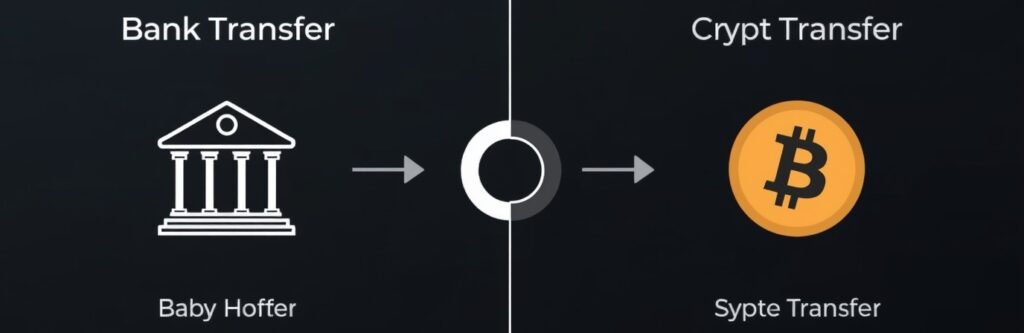
Simply put, a cryptocurrency transaction is the process of sending digital currency from one address to another. Think of it like sending money from your bank account to someone else’s account. The logic is similar:
- You enter the amount
- You enter the recipient’s details
- You confirm the transfer
- A fee is charged
- The transaction is processed
In banking, your fee is charged by the bank.
In crypto, your fee is paid as gas — more on that later.
Even though crypto feels high-tech, the idea behind it is extremely close to traditional banking. The difference is that crypto transactions happen on a public network instead of a private bank server.
2. Why Beginners Must Start With Small Amounts
Before we go into step-by-step instructions, there is one extremely important rule for every beginner:
Always make your first transactions with a very small amount.
This is not optional.
Crypto transactions are irreversible. If you:
- type the wrong address
- send funds to the wrong network
- send to a fake exchange
- make a mistake with fees
— your money may be lost forever.
There is no “bank support” that can reverse it.
For your first transaction, send something tiny — $1 or even less. This lets you confirm:
✔ The address is correct
✔ The network is correct
✔ The exchange or wallet receives funds
✔ You understand how the system works
Only after you confirm that everything works should you send the full amount.
3. Understanding Crypto Wallets (Beginner-Friendly Overview)
In crypto, you need a place to store your coins. These places are called crypto wallets.
There are several types:
1. Exchange Wallets (Hosted wallets)
These are built into your crypto trading platform.
Simple, convenient, but the exchange controls your keys.
2. Mobile Wallets
Apps like MetaMask, Trust Wallet.
Easy to use and widely considered some of the best crypto wallets for beginners.
3. Hardware Wallets
Physical devices (Ledger, Trezor).
Considered top crypto wallets for long-term storage.
For this article, we focus on mobile and exchange wallets because beginners usually start there.

4. How to Send Crypto From an Exchange to a Wallet
This is the most common transaction beginners make.
Let’s break it down into simple steps.
Step 1: Choose the Right Network
When withdrawing from an exchange, you will see several networks:
- Bitcoin (BTC)
- Ethereum (ERC-20)
- BNB Chain (BEP-20)
- Tron (TRC-20)
- Polygon
- Others
Important detail that every beginner should understand is network compatibility between an exchange and a wallet. Before sending any crypto, always make sure that the token you are withdrawing uses a blockchain network that your wallet actually supports.
For example, you might deposit USDC into an exchange, buy a token like Ethereum, and decide to withdraw it. However, the exchange may offer withdrawals for that token only through the Arbitrum network. If your wallet doesn’t support Arbitrum, the withdrawal will simply fail — or worse, the funds could be lost permanently because the networks don’t match.
When this happens, you typically have two choices: send the token to another exchange that supports the correct network, or sell it again and withdraw a different asset that your wallet can receive. This small but crucial detail often surprises newcomers, so take a moment to check token–network compatibility before hitting “Send.” A few extra seconds of caution can save you from losing access to your funds.
Important rule:
The network you choose on the exchange must match the network your wallet supports.
If they don’t match, you can lose everything.
Most beginners stick to:
- Bitcoin network when sending Bitcoin
- Ethereum network (ERC-20) when sending tokens like USDT, USDC, or ETH
- BEP-20 for low-fee withdrawals on BNB Chain
Step 2: Copy Your Wallet Address
Open your wallet → choose the coin → click “Receive”.
You will see:
- A long string of letters and numbers
- A QR code
This is your crypto address.
Double-check the entire address. Never enter it manually — always copy/paste.
Step 3: Paste the Address Into the Exchange Withdrawal Field
On the exchange:
- Choose “Withdraw”
- Select the coin
- Paste your address
- Choose the network
- Enter the amount
Always check:
✔ the first 4 characters
✔ the last 4 characters
✔ the network
✔ the fee amount
Step 4: Send a Test Transaction
Send a tiny amount first.
If everything arrives, send the rest.
Step 5: Wait for Confirmation
Crypto transactions take:
- Bitcoin → 5–40 minutes
- Ethereum → 20 seconds–5 minutes
- BNB Chain → 3–10 seconds
- Tron → 5–15 seconds
The more congested the network, the slower it gets.
5. How to Send Crypto From One Wallet to Another
This process is even easier than sending from an exchange.
Steps:
- Open your wallet
- Select the coin
- Tap “Send”
- Paste the recipient’s address
- Choose the network
- Review the gas fee
- Confirm
Again — always send a small test amount first.
6. How to Send Crypto From One Exchange to Another
This is the same as sending to your wallet, except:
- The receiving exchange gives you the address
- You must pick the correct network supported by that exchange
Warning:
Many small or unknown exchanges accept deposits but refuse or block withdrawals.
Because of this:
- Never deposit large amounts into new, unverified exchanges
- Always test with a small amount first
- Research the exchange’s reputation
Look for reviews, comments, and user reports on Reddit, Trustpilot, and Telegram.

7. What Is Gas? (Simple Explanation)
Every blockchain needs computers (called validators or miners) to process transactions. These computers need to be paid. The payment they receive is called gas.
Gas is simply:
- A transaction fee
- Paid in the blockchain’s native currency
Examples:
- Ethereum → gas paid in ETH
- BNB Chain → gas paid in BNB
- Bitcoin → fee paid in BTC
- Tron → fee paid in TRX
Just like a bank charges a fee for transfers, the blockchain also charges a fee.
8. How Gas Fees Work (Beginner Example)
Bank example:
If you send a wire transfer:
- Your bank charges $15
- The money arrives
- The bank keeps the fee
Crypto example:
If you send ETH:
- The network charges a gas fee
- The transaction is processed
- Validators keep the fee
The idea is the same — a fee for moving money.
Where to See Gas Fees Before Sending
On most exchanges, the gas fee:
- Is shown directly in the withdrawal window
- Is fixed by the exchange
- Depends on network congestion
In wallets:
MetaMask and Trust Wallet show:
- Estimated gas
- Network status
- Option to choose “low”, “medium”, or “high” fee
9. How to Check a Crypto Transaction (Block Explorers)
Every blockchain has a public website where you can check your transaction status. These are called block explorers.
Most popular explorers:
- Etherscan.io → for Ethereum
- BscScan.com → for BNB Chain
- Tronscan.org → for Tron
- Blockchain.com → for Bitcoin
When you send crypto, the exchange or wallet gives you a TXID (transaction ID).
Paste this TXID into a block explorer to see:
- If the transaction is confirmed
- How many confirmations it has
- The sending and receiving addresses
- The gas fee paid
- The exact time
Everything is transparent.

10. How to Read Transaction Status
You will see labels like:
- “Pending”
- “Processing”
- “Success”
- “Completed”
- “Confirmed”
Sometimes you may see:
- “Failed” → often due to low gas
- “Dropped” → network removed your transaction
- “Cancelled”
If your transaction fails, your funds usually return automatically — but you still pay the gas fee.
11. Most Common Beginner Mistakes (And How to Avoid Them)
Mistake #1 — Sending to the wrong network
Always match networks.
Mistake #2 — Sending to the wrong address
Never type addresses manually.
Mistake #3 — Sending large amounts without testing
Always send a small test first.
Mistake #4 — Sending to unknown exchanges
Many fake exchanges keep deposits and block withdrawals.
Mistake #5 — Not having enough gas
Always keep a small amount of the native coin.

12. Choosing the Right Wallet (Beginner Tips)
Since this article is designed for cryptocurrency trading for beginners, here’s how to choose a wallet safely:
✔ For everyday use
Mobile wallets like MetaMask and Trust Wallet are among the best crypto wallets for beginners.
✔ For long-term savings
Hardware wallets like Ledger Nano X and Trezor Model T are considered top crypto wallets.
✔ For simple trading
A secure crypto trading platform like Coinbase, Binance, or Kraken is fine.
✔ For buying your first crypto
Focus on popular assets such as Bitcoin, Ethereum, or other well-known coins often listed as the best cryptocurrency to buy today.
13. Final Safety Checklist for Every Transaction
Before you hit “Send”, confirm:
- The address is correct
- The network matches
- You understand the fee
- You are sending a small test amount
- You trust the exchange or recipient
- You have enough gas
If all these points are correct, your transaction should go smoothly.

Conclusion
Crypto transactions may seem complicated at first, but they follow a simple and predictable logic. Once you understand how networks, addresses, and gas fees work, sending digital currency becomes just as easy as sending money through your bank — and in many cases, even faster.
The key is patience and caution.
Start small. Double-check everything. Use trusted platforms.
And learn how to read your transactions using block explorers.
With these skills, you’ll be fully prepared to use crypto safely and confidently — whether you’re moving funds to crypto wallets, trading on a crypto trading platform, or buying what many consider the best cryptocurrency to buy today.