

The Future Crypto Is Trying to Build: What Vision Does Cryptocurrency Truly Carry?

When cryptocurrency was first introduced to the world through Bitcoin in 2009, it carried a powerful and almost revolutionary idea: money that belongs to the people. No governments. No banks. No institutions deciding what money should be, who can use it, or how much of it can exist. Crypto was meant to be a technological answer to financial systems that many people believed were outdated, unfair, or too centralized.
But more than a decade later, the reality looks dramatically different.
Yes, cryptocurrency still represents innovation and financial freedom.
But it’s also a space heavily influenced by big capital, powerful corporations, and governments that want control over anything related to financial activity.
So what happened?
Where is crypto heading?
Will the future of cryptocurrency remain close to its original vision, or is it evolving into something entirely new?
This article explores the future idea behind cryptocurrency, touching on its evolution, contradictions, challenges, and the direction society may ultimately take — including the possibility of having one universal cryptocurrency or a small group of dominant digital currencies used for everyday transactions.
1. The Original Vision: Independent Money for a Free Digital World
Bitcoin’s creation came in response to the 2008 global financial crisis, when banks failed, credit collapsed, and governments began printing massive amounts of new money. The person (or group) behind the name Satoshi Nakamoto wanted to create a monetary system that couldn’t be manipulated or controlled by any authority.
The foundational ideas were simple:
1.1. Independence
Cryptocurrency was meant to be free from governments and banks.
Anyone could use it.
No one could freeze your funds, control your account, or tell you how much money you’re allowed to spend.
1.2. Transparency
Crypto was built on technology that allowed everyone to verify transactions without trusting a central entity.
The system itself was supposed to be the “bank.”
1.3. Limited supply
Unlike traditional currencies, which governments print endlessly, many cryptocurrencies (such as Bitcoin) were designed with fixed supply limits. This made them harder to devalue.
1.4. Global accessibility
Crypto was intended to give financial access to people without bank accounts or living in unstable countries with weak currencies.
It was a dream of digital freedom, financial equality, and borderless money.
But as crypto started growing, it faced the same reality every revolutionary idea faces:
the world’s existing power structures don’t just step aside.
2. What Crypto Looks Like Today: Control, Regulation, and Big Capital
The crypto ecosystem today is more complex and far from its original “pure independence.” It remains innovative, yes — but also influenced, shaped, and often controlled by powerful forces.
Let’s break down the key changes.

2.1. Big Capital Now Dominates the Crypto Market
When Bitcoin was launched, anyone could mine it using a cheap laptop.
Today, mining is controlled by:
- huge corporations
- mining farms
- wealthy investors
- industrial-level equipment
Ordinary people no longer have equal access.
The same happened with trading.
Early crypto users were individuals buying small amounts.
Today, trading volumes are controlled by:
- hedge funds
- institutional investors
- billionaires
- algorithmic trading firms
Where people once saw an open, people-powered currency, price movements are now influenced by the same financial giants crypto was meant to escape.
2.2. Governments Entered the Game — and They Play Hard
Governments originally ignored crypto.
Then they feared it.
Now they are integrating and regulating it.
Countries realized:
- crypto can’t be stopped
- but it can be controlled
- and it must follow financial laws
Today, governments:
- require exchanges to collect customer data
- demand tax reporting
- track transactions
- freeze accounts on request
- impose strict rules on companies operating with crypto
Crypto was meant to bypass government control.
But in reality, if you use any mainstream exchange, you’re already inside a government-regulated system.
2.3. Centralized Exchanges Became the New Banks
Originally, crypto users managed their own wallets and private keys.
But today, more than 70% of all crypto transactions flow through centralized exchanges such as:
These companies act like banks:
- They hold your funds.
- They verify your identity.
- They block accounts.
- They report to authorities.
- They track transactions.
And here is the key truth:
If your crypto is on a centralized exchange, the government can access it whenever they want.
Crypto was supposed to eliminate middlemen.
Instead, new middlemen were created — just digital ones.
3. The Future: One Global Cryptocurrency or a Core Group of 5–6 Major Currencies?
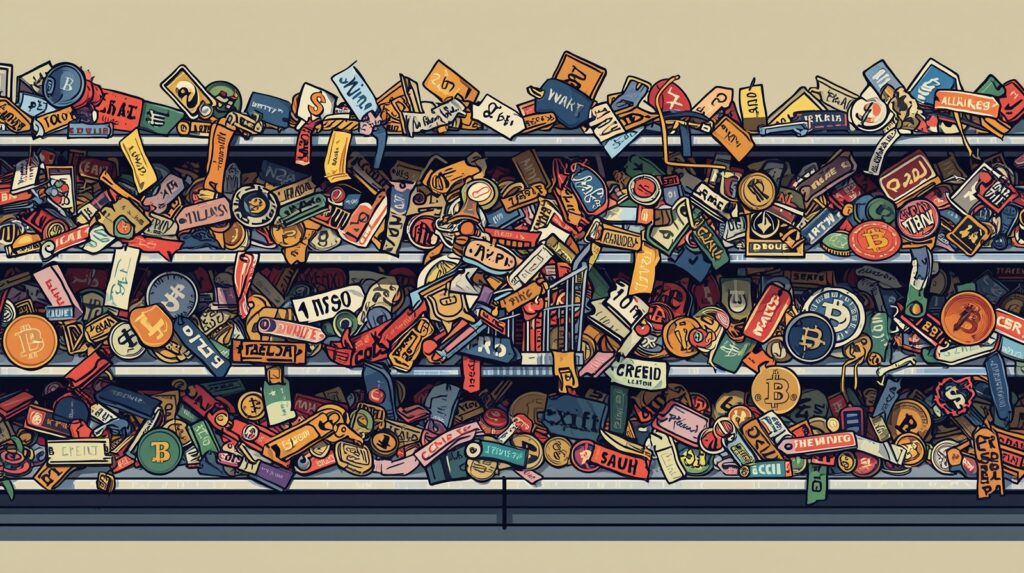
Right now, the world has tens of thousands of cryptocurrencies — a chaotic, impractical number for everyday use.
Imagine walking into a store and seeing:
- 1 product
- 10,000 prices
- one for each coin
It’s impossible.
For real mass adoption, humanity will eventually need either:
Option 1: One Universal Cryptocurrency
A single digital currency used globally for payments.
Something similar to a “digital dollar,” “digital euro,” or global stablecoin backed by major countries.
Or:
Option 2: A Core Group of 5–6 Dominant Currencies
Like the world currently uses:
- USD
- EUR
- GBP
- JPY
- CHF
In crypto, the future might stabilize around:
This small group would become the backbone of digital payments, while thousands of smaller tokens remain niche projects or disappear entirely.
4. What Happened to the Early Cryptocurrencies? Where Are They Now?
Many people forget that Bitcoin was not alone in the beginning.
Dozens of early coins followed shortly after:
- Namecoin
- Peercoin
- Feathercoin
- NovaCoin
- Mastercoin
- Nxt
- BitShares
Today, almost all of them are:
- dead
- abandoned
- delisted
- irrelevant
Why?
4.1. They lacked real use cases
Many early projects were simply copies of Bitcoin with minor changes.
No innovation → no future.
4.2. They were run by small teams
Without funding, marketing, and large communities, they couldn’t survive.
4.3. Competition exploded
New coins with better technology replaced older, weaker ones.
4.4. The market became professional
Investors look for serious projects, not experiments.
The future will look similar:
90% of today’s coins will disappear, just like the first generation.
But the ones that remain — the true leaders — will shape the digital economy of the future.
5. The Next Stage of Crypto: Between Freedom and Control
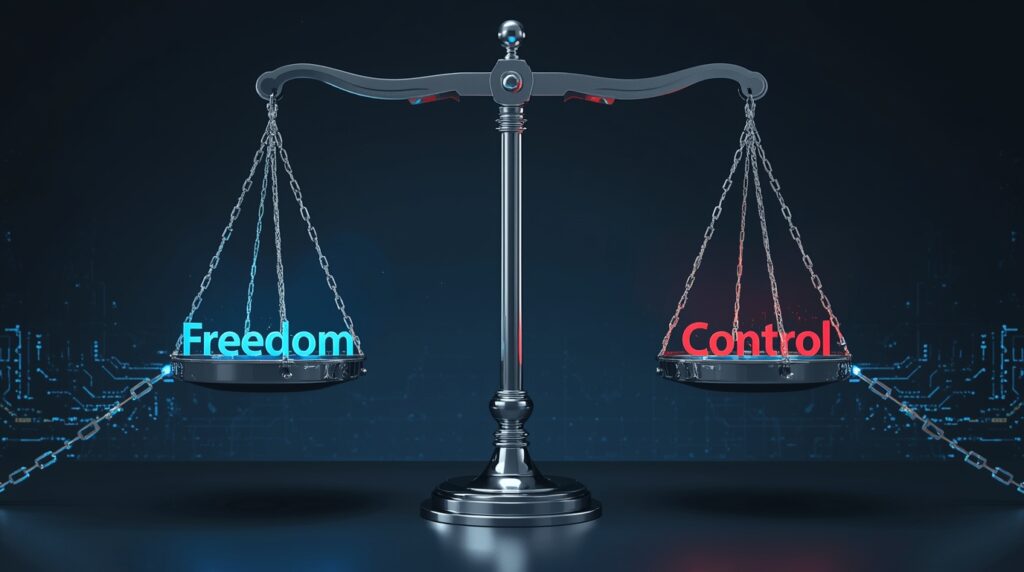
We are entering a new era where crypto will evolve into a hybrid model:
5.1. More Government-Backed Digital Currencies
Countries are developing CBDCs — Central Bank Digital Currencies.
These are digital dollars, euros, yuan, etc.
They are not cryptocurrencies.
They are fully controlled digital money, giving governments more power than ever.
5.2. Blockchain Will Stay — but People Won’t See It
In the future:
- you will buy coffee with digital money
- you won’t know whether it uses blockchain or not
- everything will happen behind the scenes
Crypto technology will become invisible — like the internet today.
People use it without understanding how it works.
5.3. Financial Systems Will Merge
Traditional finance and crypto will merge:
- banks will store crypto
- crypto platforms will offer loans
- digital IDs will connect to wallets
- taxes will be automatically calculated
Crypto won’t replace the old system.
It will upgrade and merge with it.
6. The Original Idea: Will Crypto Ever Become Truly Independent Again?
The sad but realistic truth:
the completely free, independent crypto world no longer exists.
But that doesn’t mean its original spirit is dead.
Here’s what remains strong:
6.1. Peer-to-Peer Money Still Exists
Bitcoin still allows direct transactions:
- from person to person
- without banks
- without permission
- globally
- instantly
This core idea is alive.
6.2. Decentralized Finance (DeFi) Is Growing
DeFi allows:
- lending
- borrowing
- trading
- saving
without banks or centralized exchanges.
It’s the closest we have to the original vision.
6.3. Self-Custody Wallets Empower Individuals
Hardware wallets and decentralized wallets allow you to hold crypto truly independently.
No bank, no government, and no exchange can touch it.
6.4. Privacy Coins Still Exist
Some cryptocurrencies still protect anonymity:
Governments hate them — which is a sign they work.
7. My Added Perspective: What Crypto’s Future Really Depends On
Let’s take a step beyond analysis and look at the deeper truth:
7.1. The Battle for Digital Freedom Has Just Started
Crypto is not just a financial tool.
It is a philosophical idea:
- ownership
- freedom
- independence
- self-sovereignty
- global connectivity
Governments and corporations want control.
Crypto communities want freedom.
This clash will shape the next 20–30 years.
7.2. The Future Will Be a Balance, Not a Victory
Crypto will not completely escape regulation.
Governments will not eliminate crypto.
The final outcome will be a hybrid world.
Where:
- regulated digital currencies exist
- but independent crypto also survives
- and people choose the level of freedom they want
Some will choose convenience.
Some will choose freedom.
Both will exist.
7.3. The Idea of One Global Crypto Tells Us Something Important
Humanity currently uses:
- dozens of fiat currencies
- thousands of cryptocurrencies
- hundreds of payment systems
This is inefficient.
In the digital future, efficiency will win.
Whether it’s:
- one global crypto
- or a small group of core currencies
the world will move toward simplification, not chaos.
7.4. Crypto’s Final Mission Is Bigger Than Money
Crypto ultimately aims to change how we:
- store value
- exchange value
- build trust
- build global systems
- transfer power
- control identity
- protect privacy
Blockchain is not just money.
It is the foundation for a new digital civilization.
And this is the real future idea behind crypto — much bigger than price charts, trading platforms, or short-term investments.
Conclusion: The Future of Crypto Is Not What We Expected — But It Is Still Powerful
Crypto started as a revolution.
Today it’s a negotiation.
But tomorrow it may become a new global standard.
Here is what we can confidently say:
- The original idea of independent money still exists — but now it competes with powerful systems.
- Big capital and governments will always try to control crypto, and to some extent, they already do.
- Most cryptocurrencies will disappear, just like the first generation did.
- The future will likely have one universal crypto or a handful of dominant currencies.
- Blockchain will quietly become the foundation of the financial world.
- And above all, the deeper idea — digital freedom and individual financial power — will continue to grow.
Even if the path changes, the mission continues.
The future of cryptocurrency isn’t just about money.
It’s about who controls money — and what role individuals will play in the digital world that’s coming.